
Lake View Terrace, Los Angeles County
Multi-Family HVAC in Lake View Terrace, CA
Multi-Family HVAC in Lake View Terrace, Los Angeles County: what the work involves here, and how to get it quoted.
Free Home Systems Assessment
- HVAC • Electrical • Roofing • Insulation
- Professional Evaluation for Replacement Projects
Multi-Family HVAC in Lake View Terrace
Lake View Terrace apartment and condominium owners face a clear mechanical challenge: post-war tract housing built with original ducting that was never designed for today's cooling loads. When one unit overheats, complaints spread fast and vacancy risk rises. Build Bright Home Solutions moves quickly to assess each property, plan unit-by-unit or central system replacements, and coordinate work so residents stay comfortable while the project runs.
We cover mechanical, electrical, and building-envelope upgrades across Southern California, backed by 26 years of industry experience, and we bring that depth to every multi-family project we touch in Lake View Terrace. Whether you manage a small apartment building or a larger condominium association, we are ready to scope your project and give you a clear path forward.
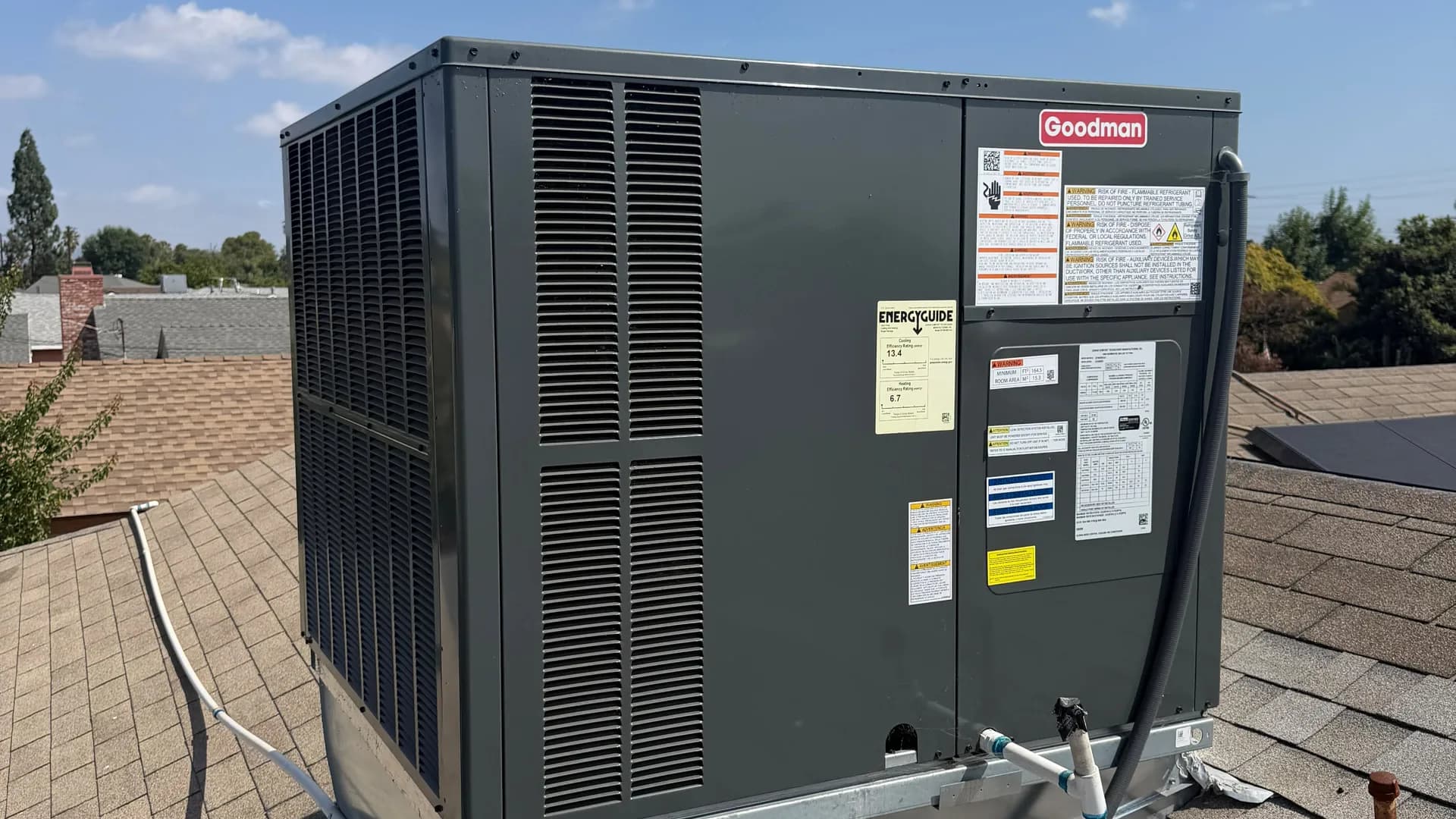
Lake View Terrace sits in the eastern San Fernando Valley where summer heat is intense and year-round comfort is a baseline expectation for renters and owners alike. The housing stock here leans heavily on post-war tract construction, which means thin attic insulation and duct systems that lose conditioned air before it reaches living spaces. That combination forces aging HVAC equipment to run longer cycles, driving up utility costs for residents and maintenance calls for property managers. Large south-facing roofs are common on these properties, which creates opportunity for future energy upgrades alongside mechanical work. HOA rules in some condominium communities also shape how and where equipment can be placed. Build Bright Home Solutions accounts for all of these site-specific conditions when designing replacement systems so the finished installation fits the property and satisfies ownership requirements.
The ducts are often the weak link. A high-efficiency system pushing air through leaky 1960s ducting never delivers its rating.
What that involves
- Unit-by-unit HVAC replacement coordinated to minimize disruption to occupied apartments and condominiums
- Central system assessment and replacement for properties that share air handling or boiler equipment
- Duct inspection, sealing, and replacement to address the leakage common in post-war Lake View Terrace construction
- Equipment selection and layout planning that accounts for HOA placement rules and rooftop or ground-level constraints
- Electrical and building-envelope coordination so mechanical upgrades are supported by adequate power and insulation
Lake View Terrace
Multi-Family HVAC questions from Lake View Terrace
- How do you handle HVAC replacement in an occupied apartment building without displacing residents?
- We schedule unit access in advance, complete each unit's work in a defined window, and restore cooling or heating before leaving the space. Central equipment shutdowns are planned for overnight or low-demand periods when possible, and we communicate the timeline clearly to property managers so they can notify tenants ahead of time.
- Can you replace ductwork in a post-war building that has minimal attic clearance?
- Yes. Many Lake View Terrace properties have shallow attic spaces left over from original tract construction. We assess access points during the initial site visit and choose duct routing and materials that fit the actual conditions rather than assuming standard clearances.
- Do HOA rules affect what HVAC equipment you can install in a condominium community?
- They can. Some associations restrict rooftop equipment placement, exterior condenser locations, or visible line sets. We review the relevant HOA guidelines before finalizing equipment selection so the installation meets those requirements from the start.
- What is the difference between a unit-by-unit replacement and a central system replacement?
- A unit-by-unit approach replaces each apartment or condo's independent heating and cooling equipment on its own schedule, which spreads cost and limits disruption. A central system replacement addresses shared air handling, chilled water, or boiler equipment that serves multiple units from one plant. Some properties need both approaches depending on how the original building was designed.
- How long does a multi-family HVAC project in Lake View Terrace typically take to complete?
- Project length depends on the number of units, equipment availability, and site access conditions. We provide a project schedule during the planning phase so ownership and management have a realistic timeline before work begins.
Multi-Family HVAC in Lake View Terrace?
Call (818) 915-1604 and tell us about the building.